What Is a Comp Card and Where Did It Come From?
Contents
A comp card, in Polish a kompozytka, is a model’s business card: a few photos and the basic measurements on a single card. The name is short for composite card. Polish agencies use both “kompozytka” and “comp card”. You will also come across the names “zed card” (in Polish “karta Z”) and “sedcard”, which is common in Germany.
From a comp card, an agency, client or casting director learns in one place what you look like, your measurements and how to reach you. No scrolling through your whole Instagram.
Kompozytka and other names for a comp card
Kompozytka, comp card, composite, sedcard and zed card are names for the same card:
| Name | Where it comes from |
|---|---|
| kompozytka | the Polish form of composite. This is what Polish agencies and fashion magazines write |
| comp card | short for composite card. The most common name worldwide, and in Polish agencies too |
| composite | the full, older form |
| sedcard | from the surname of Sebastian Sed. Common in Germany |
| zed card, Z card | a mispronunciation of “Sed card”. In Polish texts sometimes “karta Z” |
Where did comp cards come from?
Comp cards started in London in the 1960s and for decades were the main marketing tool for models. This is how Wikipedia tells the story:
- 1965 — Peter Marlowe invents the model composite, printed on paper in A4.
- 1972 — the format changes to an A5 card, which is easier to keep in an agency’s card files. Marlowe registers “Model Composite” as a trademark in Europe and the US, so other companies publish cards under their own names. Sebastian Sed trades as Sed Cards. For this point Wikipedia relies on two books: Michael Gross, “Model” (1995) and Robert Lacey, “Model Woman” (2015).
- 1990 — Marlowe Press stops trading, and “composite” and “comp card” become generic terms across the industry.
Peter Marlowe himself confirms 1965 and 1990 in the history of his publishing house (a 2008 archive of the site).
What usually goes on a comp card?
A typical comp card includes:
- Photos: one main image (usually a portrait) and a few showing the figure and different angles
- Measurements: height, bust (chest for male models), waist, hips, clothing and shoe size
- Looks: eye and hair colour
- Contact: the agency or the model
A printed comp card is usually A5 on heavy card stock.
Some agencies make the comp card themselves, from their own polaroids, once the model is signed with them.
Comp card vs digitals vs book
A comp card, digitals and a book are three different materials a model uses:
- Digitals (polaroids) show you without retouching or make-up. They are the raw material an agency uses to judge your features and proportions.
- A book is your portfolio: the best images from shoots and jobs.
- A comp card is a digest of either one on a single card, with measurements and contact details.
Why comp cards still matter
Comp cards still matter because they make models quick to compare. Most submissions now happen online, but they often still follow the comp card layout: main image, a few shots, measurements. When every card looks the same, a casting can compare many people quickly. A printed version is still useful at castings and client meetings.
A comp card in the package with your digitals
The comp card is part of the Digitals package, so it also comes with the Tests and Extended Tests packages. You get it together with your digitals, or within 48 hours of sending your measurements. I make it in four versions, because each one does a different job.
Classic double-sided — for agencies
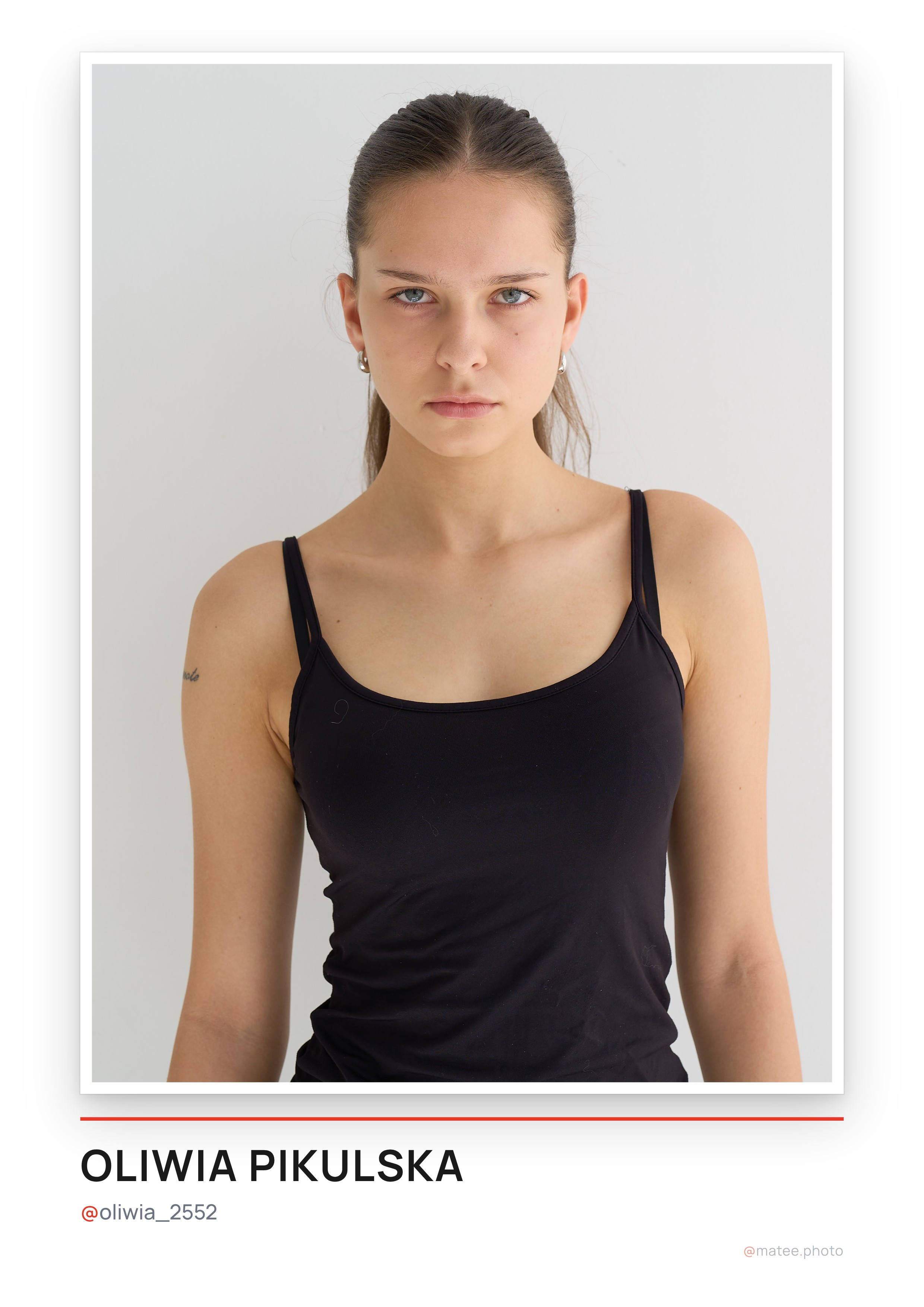
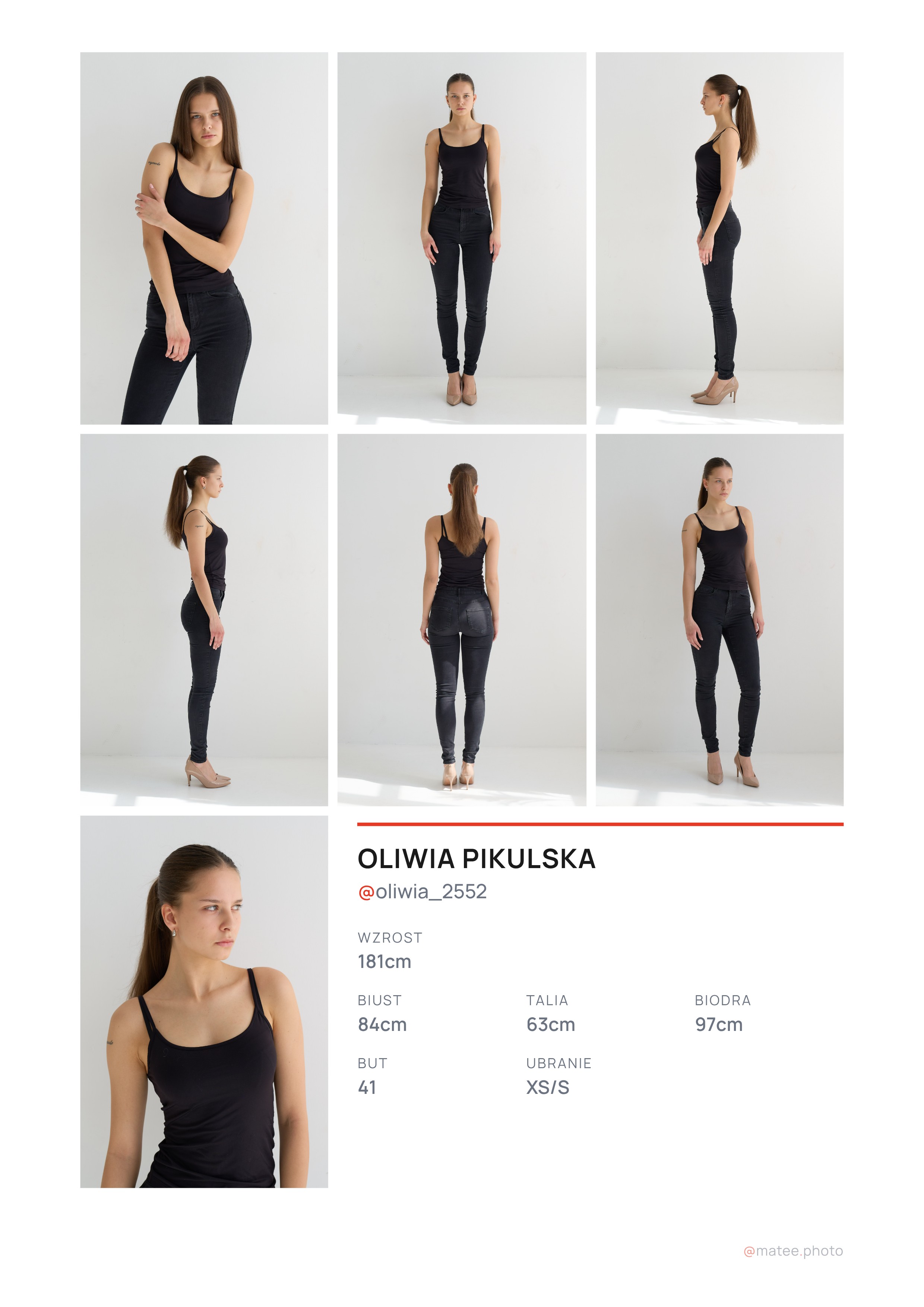
The classic comp card layout: a portrait and name on the front, seven shots and measurements on the back. This is the one you take with you to an agency. The file is A4 at 300 DPI, but you can print it smaller: two A5 pages on one A4 sheet, or double-sided on smaller paper.
Landscape — every photo on one page
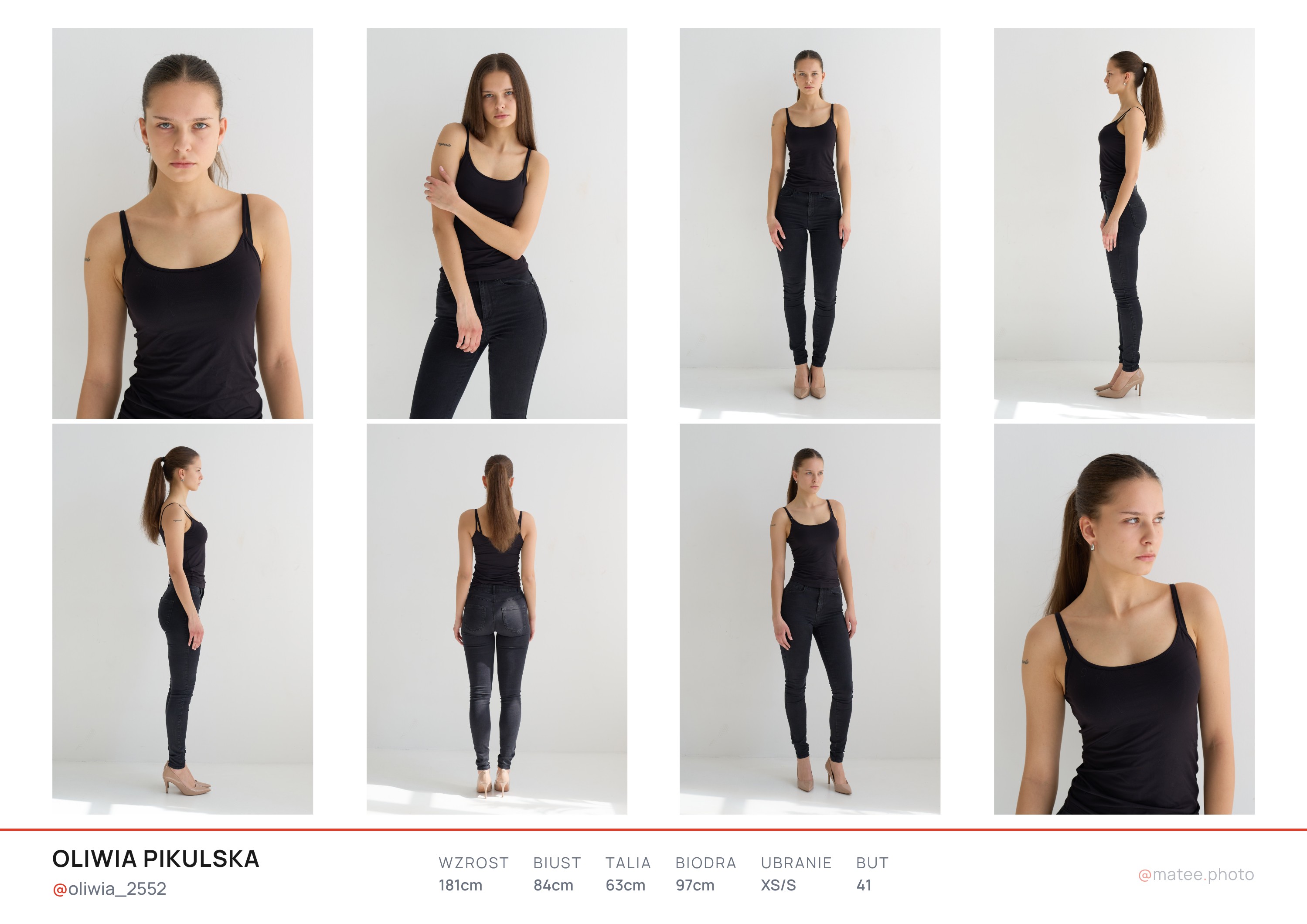
Eight digitals and measurements on one page. This format often works well too, because everything is visible at once, with no need to turn the card over.
On set — the portrait or every photo
On bigger shoots, the models’ cards hang in the studio so everyone knows which model goes to which part of the shoot and which outfit. Sometimes the portrait alone is enough, which is the front of the classic comp card. Sometimes the landscape version with every photo works better.
Vertical and video — for social media
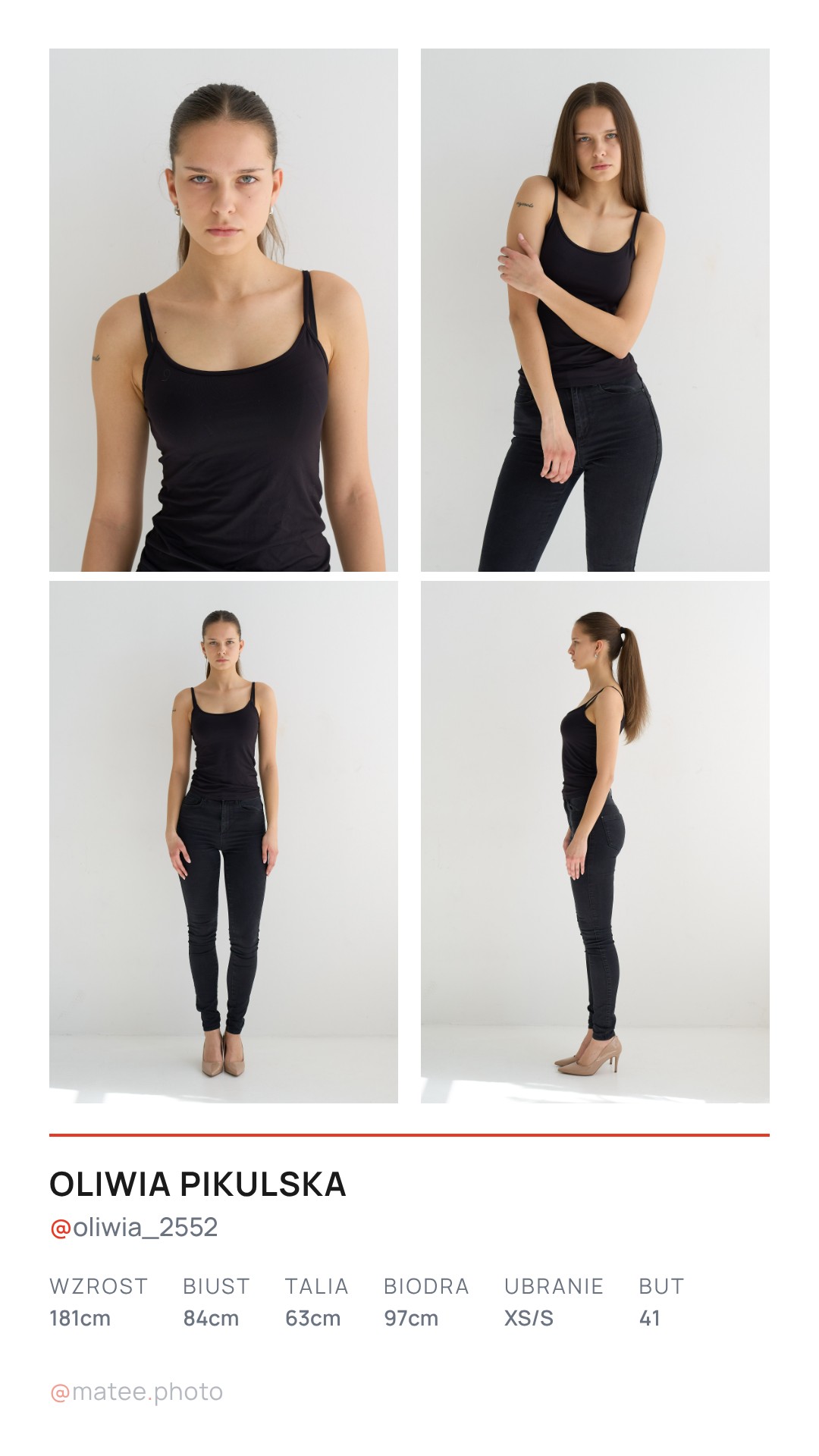
The vertical comp card fits stories or a post, the video comp card fits reels and TikTok. Both are 9:16.
The photos on a single comp card look consistent because I crop every set of digitals to the same template: the head and feet sit in the same spot in every photo. The template is an overlay with guide lines I match the crop to in Capture One. How it works, and how to download it for free, is in the post about the digitals cropping overlay.
If you’re a model and need digitals for a modeling or acting agency, see the packages and prices. Every one of them includes a comp card.